
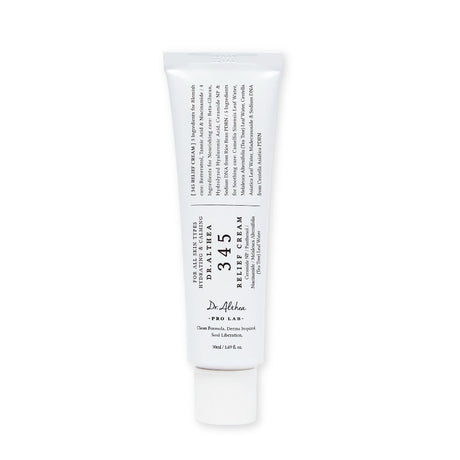
![[Dr. Althea] 345 Relief Cream](http://yepposoonsoo.se/cdn/shop/files/Dr._Althea-345-Relief-Cream-renewal-1_89651897-f9a7-46de-ad9a-1747adbd85dc.jpg?v=1777545401&width=460)
![[Dr. Althea] 345 Relief Cream](http://yepposoonsoo.se/cdn/shop/files/Dr._Althea-345-Relief-Cream-renewal-2_8a419b4b-1c8c-4489-b4d3-3a7e28dbaa50.jpg?v=1777545402&width=460)
![[Dr. Althea] 345 Relief Cream](http://yepposoonsoo.se/cdn/shop/files/Dr._Althea-345-Relief-Cream-renewal-3_b1455239-8673-4191-a80e-278456f3580d.jpg?v=1777545402&width=460)
![[Dr. Althea] 345 Relief Cream](http://yepposoonsoo.se/cdn/shop/files/Dr._Althea-345-Relief-Cream-renewal-4_380bb666-3505-46ac-bc8d-a1892a68c4f3.jpg?v=1777545402&width=460)
![[Dr. Althea] 345 Relief Cream](http://yepposoonsoo.se/cdn/shop/files/Dr._Althea-Cream-Comparision_220f4869-062a-4d1d-bd52-b1c79bd7613c.webp?v=1777545401&width=460)
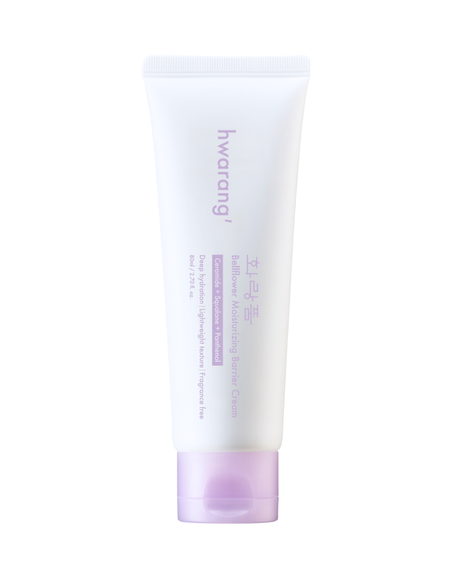
![[hwarang'] Bellflower Moisturizing Barrier Cream](http://yepposoonsoo.se/cdn/shop/files/hwarang-barrier-cream_b905b6f7-4c03-400f-9951-356805f91ab3.webp?v=1783624199&width=460)
![[hwarang'] Bellflower Moisturizing Barrier Cream](http://yepposoonsoo.se/cdn/shop/files/hwarang_bellflower_barrier_cream_43203567-c956-4f5a-bd77-137b16676258.jpg?v=1783624200&width=460)
![[hwarang'] Bellflower Moisturizing Barrier Cream](http://yepposoonsoo.se/cdn/shop/files/hwarang-barrier-cream-mood3.webp?v=1783624199&width=460)
![[hwarang'] Bellflower Moisturizing Barrier Cream](http://yepposoonsoo.se/cdn/shop/files/hwarang-barrier-cream-mood_af37e3db-96f5-468b-b276-695f9c049a36.webp?v=1783624199&width=460)
![[hwarang'] Bellflower Moisturizing Barrier Cream](http://yepposoonsoo.se/cdn/shop/files/hwarang-barrier-cream-texture.webp?v=1783624199&width=460)
We talk a lot about skincare and skincare routines, so it’s high time to take care of haircare ✍🏼 This topic, however, concerns (almost) everyone and is often a source of great confusion and even frustration. We all have our own challenges when it comes to hair and usually strive for a certain effect, such as volume or softness.
Especially Nordic hair is often thinner and smoother in quality, which presents its own challenges in care. In this article, we cover general haircare and treatment, how to achieve strong and healthy hair, and how to choose the right products for each hair type.
- What is hair?
- How does Korean hair differ from Nordic hair?
- All about hair washing
- All about haircare
- How to choose the right shampoo and conditioner?
- The best way to dry your hair
What is hair and what is it made of?
One reason hair receives less attention in beauty care is the misconception that since hair is not alive, it cannot or does not need to be cared for. This is not true – hair can be cared for in many different ways, and just like with skin, preventive care is the most important way to take care of hair. However, the scalp and hair follicle, where the hair grows, are alive, and it is also important to consider them.
Hair consists mainly of a protein called keratin and also a keratin-like matrix protein. The structure of hair is complex; its surface, the cuticle, consists of keratin fibers that protect the inner parts of the hair. This transparent surface layer tries to repel water, and on undamaged hair, these scales are more “closed.” If the scales lift, the cuticle more easily lets water in, which can damage the hair. The majority of the hair consists of its fiber layer, made of keratin and the pigment that gives hair its color, melanin. At the core is the hair’s medulla, which can be completely absent in very thin hair strands.
The durability, quality, and shape of hair are affected by its bonds. Different chemical bonds in the hair and their strength and quantity influence, among other things, how strong the hair is. So, just having a thick hair strand does not guarantee that the hair is strong.

How does Korean hair differ from Nordic hair?
Is hair quality very different among people? In the Nordic countries, there are many different hair types, from very coarse and thick hair to thin and smooth hair. Some have very curly hair, and others have pin-straight hair.
The same applies in Korea, where there are different hair types, both thinner and thicker, curly or straight. Generally, however, the Asian hair type is often thicker and straighter. For example, it has been shown that Asian hair has a thicker fiber layer compared to other groups because it has more layers of keratin. Asian hair has also been shown to tolerate mechanical abrasion better than other hair types. Otherwise, Asian and Caucasian hair have very similar properties, and the mentioned differences also vary greatly between individuals.
Korean cosmetics offer many different haircare products, reflecting the various needs in haircare. There are also several products targeting specific challenges. A common challenge for the Asian hair type is hair loss, a problem that many in the Nordic countries also suffer from. Various scalp issues have been considered in, for example, Kundal’s caffeine-containing ampoules and VT Cosmetics PDRN scalp serums.

All about hair washing
Everyone surely knows the basic principle, shampoo and conditioner, but there are still many misconceptions and incorrect ideas about haircare. We go through the basics of hair washing and care, from washing intervals to finding the right conditioner and how to dry your hair.
The oil level of hair is very individual and is influenced, like skin, by genetics and environment. The oil level, sweating, environmental pollution, and styling products are reasons why it’s good to wash hair regularly. The washing interval varies greatly between individuals – too long between washes increases the risk of inflammation and residue in the hair, but washing too often can dry out and irritate the scalp and damage the hair. Therefore, choose a shampoo and washing interval that suits you. There are often claims that there is a general correct washing interval for everyone, but that is not the case; individual differences are large. For many, the interval is every 1-2 days or only once a week or even every other week. For example, very coarse hair does not need to be washed as often as thin and fine hair. Few need to wash their hair every day, but if you feel it is necessary, make sure the shampoo you choose is milder in cleansing effect and contains enough nourishing ingredients.
Does hair need double washing?
There is some basis for double washing being beneficial, especially if the hair is very dirty or styling products have been used. When washing, you can often feel if the hair feels clean or not. Clean hair has no residue of dirt or styling products, so it feels smooth and lighter. If the hair does not feel like that after the first wash, it may be worth repeating the wash once more.
The shampoo’s lather can also be a sign of how well it has cleaned your hair. Typically foaming shampoos do not form foam if all micelles formed by the shampoo are bound to dirt. Foam forms, however, if cleansing agents are “in excess” and no micelles form, which produces foam. But since foam formation varies greatly between shampoos and some shampoos do not foam at all, it can be an unreliable indicator of cleansing effect. Foam itself says nothing about cleansing power but often gives a feeling of cleanliness and is therefore a popular feature in shampoos.
Is a deep-cleansing shampoo really necessary?
Deep-cleansing shampoos are rarely necessary; their cleansing effect is very strong and they can leave hair squeaky clean, which is not always needed. This also increases the demands on the conditioner’s effect, so you can do more harm than good. A regular shampoo should already remove all unnecessary substances from the hair. If you have found a perfect deep-cleansing shampoo for you, of course continue using it! But buying a separate one is hardly necessary.
All about haircare
Does hair need conditioner?
The longer the hair gets, the more likely you need some form of conditioner. Hair is exposed daily to mechanical, chemical, as well as heat and sun-related stress. Since hair cannot repair itself, it is important to care for it regularly, for example during washing. The classic way to care for hair is conditioner – it is useful regardless of how cleansing or mild your shampoo is, because shampoo likely cannot provide sufficient care to the hair ends, especially for long hair.
What does conditioner do?
The effect of conditioner is based on the ingredients’ ability to form a protective film on the hair’s surface and on the charges of the ingredients and the hair. When hair is wet, it is negatively charged, and conditioner contains positively charged, i.e., cationic, ingredients. These attach to the wet hair and repair its damaged parts. The more cationic ingredients, the more nourishing the product is. Fatty alcohols together with these cationic ingredients perform much of the conditioner’s work. Other good ingredients in conditioners are silicones and proteins. Silicones effectively smooth the hair’s surface without weighing it down. There are many different silicones, so they work differently overall. And one thing to clarify: silicones are not the same as plastic ☝🏼 If you still do not want to use silicones on principle, there are good alternatives such as vegetable oils or proteins, which are especially good for damaged hair.
How long does conditioner need to work?
A regular conditioner does its job quickly. Conditioner does not need to stay in the hair long to work sufficiently. The chemical action of conditioner occurs during rinsing, when its cationic ingredients attach to the hair’s damaged parts. So if you apply conditioner carefully and then rinse your hair, the conditioner has done its job and does not need to work for long.
The exception is some protein-rich conditioners that need longer time in the hair to achieve full effect. Usually, about 5-10 minutes is enough. An example is Kundal’s Protein Treatment, which contains hydrolyzed soy protein and several plant extracts. This conditioner is perfect for somewhat drier or treated hair. But with a regular conditioner, careful application on towel-dried hair and rinsing is enough.

How to choose the right shampoo and conditioner?
Korean cosmetics offer many product options for different hair types, from straight to very curly hair.
The shampoo must have the right balance in cleansing effect. If the shampoo leaves the hair squeaky clean, the conditioner has a bigger task to smooth and repair the hair’s surface. Often the challenge is that the scalp has completely different needs than the hair ends. It can be a good idea to combine products from different categories. For example, if your hair gets oily quickly but is still dry at the ends, you can choose a volumizing shampoo together with a moisturizing conditioner.
Fine hair can especially benefit from volumizing products. They are formulated to reduce hair weighing down and can also make hair easier to manage. The volume effect can be achieved with various polymers. Polymers help hair hold a certain shape and provide structure. Polymers are also used in products for curly hair because they facilitate handling and define curls. (What are polymers? Polymers are simply long molecular chains; they can be natural or synthetically produced. Plastic is also polymers, but not all polymers are plastic) – this can be mentioned as a side note. For example, Daeng Gi Meo Ri Vitalizing shampoo is a product for quickly oily hair that also strengthens hair and provides structure to thin and/or curly hair with the help of polymers.
Damaged or treated hair needs conditioners that contain plenty of cationic ingredients that can repair damage in the hair. These include ingredients ending with -onium in INCI, such as behentrimonium chloride and cetrimonium chloride. These are very common cationic ingredients. Proteins also nourish and strengthen hair. The savior for damaged and dry hair is Daeng Gi Meo Ri Ki Gold Premium Treatment, which contains plenty of plant extracts and silicones that smooth the hair’s surface.
Frizzy hair needs enough nourishing ingredients that smooth the hair’s surface as well as cationic ingredients. Silicones are again a simple and effective ingredient group. Moisture from the environment easily makes hair frizzy, even if it was completely smooth when you left home. All changes in humidity, whether from humid to dry or vice versa, can make hair frizzy. For frizzy hair, leave-in conditioner can be an excellent solution, for example the wonderfully scented Odid Milk Protein Treatment that is sprayed on towel-dried hair after washing, but its light formula does not weigh hair down or make it greasy.
What about a very irritated and sensitive scalp? Choose a mild shampoo with ingredients that care for and cool the scalp. For example, Some By Mi’s Cica Peptide Derma Scalp shampoo balances the scalp, cools, and gently exfoliates skin cells. The peptides and panthenol in it care for and strengthen the skin during washing. Also, the tonic from the same series, sprayed on the scalp after washing, soothes irritated scalp.
Bleached hair also has its own products; the most common are so-called purple shampoos that neutralize yellow or orange tones in bleached hair. For example, Lador Anti-Yellow Treatment is a color-correcting conditioner that contains nourishing plant oils for treated hair as well as essential fatty acids and cationic ingredients for the hair.
What is the best way to dry hair?
Hair has many chemical bonds, some permanent and others temporary. When hair is wet, hydrogen bonds break and form again. This happens every time you wash your hair and is unavoidable. Thanks to the breaking of these temporary bonds, you can, for example, style hair into a certain shape when it is wet, but not as easily when it is dry. What does this matter? When hair is wet, it is also in its most sensitive state, so how you treat your hair matters. However, this also depends on hair type – curly and straight hair behave a bit differently when wet and benefit from different treatments.
A practical example: many of us may have at some point gone to bed with wet hair 👀 Then the hair is exposed to strong mechanical stress while it is most fragile, and it can form new temporary chemical bonds that leave the hair in interesting shapes... Moreover, it damages the hair’s structure, especially if the hair is already fragile, for example after bleaching. A warm recommendation to everyone: it is better to blow-dry your hair than to go to bed with wet hair.
The gentlest ways to dry hair depend on many factors, but generally towel drying, blow-drying with heat protection, and air drying are the gentlest methods. Hair turbans for blow-drying are also very practical because they do not pull on the hair as much with their weight, dry effectively, and are comfortable to use. Any unnecessary pulling, frizzing with towels, or vigorous brushing can damage the hair’s outer and inner layers.
Have you learned something new from this article? 
 info@yepposoonsoo.se
 14 dagar returrätt
 SSL Encryption
 Secure Checkout
 PCI-DSS Compliant
 PayPal Buyer Protection
 Klarna – Pay Securely
![[Centellian24] 360º Shot PDRN Lifting Eye Cream](http://yepposoonsoo.se/cdn/shop/files/Centellian24-360-Shot-PDRN-Lifting-Eye-Cream.jpg?v=1779196334&width=156)

![[Round Lab] 1025 Dokdo Cleanser](http://yepposoonsoo.se/cdn/shop/files/Round-Lab-Dokdo-Cleanser.png?v=1751573400&width=156)
![[Centellian24] Madeca Cream Time Reverse](http://yepposoonsoo.se/cdn/shop/files/Centellian24-Madeca-Cream-Time-Reverse.png?v=1779864565&width=156)